
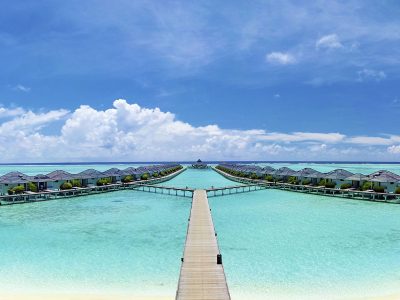
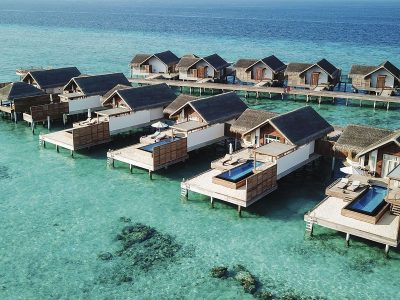
Packing for the Maldives is not like packing for any other luxury trip you’ve taken. You’re not heading to a city hotel where a forgotten item means a quick cab to the nearest pharmacy. You’re boarding a seaplane to a private island in the middle of the Indian Ocean, stepping onto an overwater deck, and spending your days above one of the most fragile coral ecosystems on the planet. Getting your Maldives packing essentials right makes the difference between a smooth island stay and a series of avoidable headaches, and the stakes here are higher than on almost any other trip you’ll plan.
The good news is that packing smart for the Maldives isn’t about hauling more. It’s about knowing exactly what to bring, what to leave at home, and what’s already waiting for you in your villa. This guide covers everything from reef-safe sunscreen selection to seaplane weight limits, so you can pack with confidence and arrive ready for the trip you actually planned.
One practical tip before you even open a suitcase: check your specific resort’s villa inclusions first. Luxury overwater properties routinely stock snorkeling gear, premium toiletries, and beach towels directly in the villa. The curated listings at the Ultimate Maldives Bungalow Guide detail these inclusions property by property, which can save you from packing items you don’t need at all.
Maldives packing essentials: sun protection
The sunscreen mistake is one of the most common – and potentially the most damaging. Many travellers simply pack the sunscreen they already have, only to discover upon arrival that it isn’t reef-safe. Not only can this harm the fragile marine ecosystem, but replacing it at a resort often comes at a premium price. Packing reef-safe sunscreen before you travel is a simple way to protect both the coral reefs and your wallet.
Why reef-safe sunscreen is non-negotiable
The Maldives encompasses fragile, biodiverse coral reef ecosystems, and reef-protection guidance from conservation organizations consistently identifies oxybenzone and octinoxate as the sunscreen ingredients most frequently cited as harmful to corals. These chemicals appear as active ingredients in the majority of drugstore sunscreens. Several Maldives resorts actively restrict chemical sunscreens at the beach, check your resort’s policy before you arrive, as some enforce those restrictions at the waterline.
The safe alternative is a mineral sunscreen using non-nano zinc oxide or non-nano titanium dioxide as the only active ingredients. Read the label carefully: “reef-safe” branding is not regulated, so you need to verify the ingredient list yourself. Trusted brands that meet this standard include Thinksport SPF 50, Raw Elements SPF 30, Badger Balm, and Stream2Sea Coral Care. All are widely available online before your trip.
Physical sun protection: what else covers your skin
On snorkeling days, you’ll spend long stretches in the water under direct equatorial sun. A UPF 50+ rash guard provides strong physical protection and can significantly reduce your reliance on sunscreen, better for your skin and better for the reef. Pair it with a wide-brim hat for time on the deck and an SPF lip balm, which most travelers forget until day two when their lips are already burned.
Physical sun protection is not optional in the Maldives. The UV index in equatorial locations is frequently very high, check the local UV forecast for your travel dates, and you’ll be on or near the water for most of your day. A rash guard belongs on your core packing list, not the maybe pile.
Maldives packing essentials checklist: water activity gear
The Maldives consistently ranks among the world’s best snorkeling and diving destinations, and the experience of floating above a reef teeming with manta rays, turtles, and reef sharks is the reason most guests come. What you pack for the water directly affects the quality of that experience. Here’s a quick-reference snorkeling gear checklist before the full breakdown:
- Personal snorkel mask and snorkel tube
- UPF 50+ rash guard
- Waterproof phone case or dry pouch
- Small dry bag for boat excursions
- Underwater camera or GoPro (optional but worthwhile)
Snorkeling gear: bring it or rent it?
Resort rental masks are functional, but many travelers find them ill-fitting, and a leaky mask ruins a snorkeling session fast. Bringing your own mask and snorkel is a lightweight call: both pack flat, weigh almost nothing, and guarantee a proper seal. Fins add bulk and weight, and most resorts provide rental fins that are adequate for casual snorkelers, so leave those at home. If you wear prescription glasses, a prescription dive mask is worth the investment and should absolutely make the trip.
Waterproof bags, dry pouches, and underwater cameras
Overwater villa living means your belongings are constantly close to the water. A dry bag or waterproof phone case is a practical necessity, not a splurge. For capturing reef moments, a GoPro or a compact waterproof camera is far safer than using your phone at the water’s edge. These items are small and light but protect devices that cost far more than the bag itself. Pack one dry pouch for your phone and one small dry bag for anything else that goes on a boat with you.
Seaplane baggage rules: Maldives packing essentials that catch travelers off guard
Here is where the trip planning tends to break down for first-time Maldives visitors. The domestic seaplane transfer to your resort is not like checking a bag at JFK. It operates under strict aviation-grade rules, and showing up with an oversized hard-shell suitcase creates a real problem at the transfer terminal.
The standard seaplane baggage allowance
Trans Maldivian Airways, the primary seaplane operator, sets the standard allowance at 20 kg checked luggage plus 5 kg carry-on per person. Excess baggage is charged at approximately USD 5 per kilogram plus applicable taxes. No individual bag should exceed 32 kg, and infants under two typically receive no separate baggage allowance. These are aviation limits, not resort policies, they apply regardless of what your international airline allows on the long-haul flight. Always confirm current limits with your resort or transfer voucher, as allowances can vary by operator and season.
Why soft-sided bags matter for island transfers
Hard-shell suitcases are awkward to load into seaplanes and small transfer boats. The cargo holds are compact, and baggage handlers need flexibility to fit multiple guests’ luggage. A soft-sided duffel or collapsible travel bag fits far better and compresses when you’ve unpacked, freeing up space in your villa. Use your structured carry-on for the international leg and switch to your soft bag as the primary checked piece for transfers. Speedboat transfers are more forgiving on weight, but compact luggage still makes the boarding process smoother for everyone.
What to wear: resort dress codes and local island etiquette
Your Maldives wardrobe serves two distinct contexts, and conflating them is a common packing mistake. Resort wear and local island wear are not interchangeable, and packing for both doesn’t require a second suitcase.
Smart casual for resort evenings and restaurant dining
Most luxury resorts enforce a smart-casual standard at their primary restaurants in the evening. Swimwear is not appropriate at the dinner table, even at relaxed beachfront properties. Pack one or two elevated evening outfits: linen trousers, a sundress, a lightweight blouse, or a relaxed collared shirt. The vibe is effortlessly put together, not formal. Sandals are acceptable at most venues, and some open-air restaurants are barefoot by design.
Dressing respectfully for local island excursions
Inhabited local islands in the Maldives follow Islamic cultural norms, and visitors are expected to dress accordingly. Women should cover shoulders and knees in public spaces; men should wear T-shirts and knee-length shorts. Swimwear is reserved exclusively for designated tourist beach areas, not village streets or local shops. A light sarong or scarf is the most versatile item in your entire bag: it works as a cover-up, a beach wrap, and an extra layer on air-conditioned transfers. One sarong does the job of several items.
Health, documents, and travel admin essentials
Remote island travel demands more preparation on the documentation and health supply front than a typical international vacation. Medical facilities on resort islands are limited, and the nearest hospital can require a lengthy boat ride or evacuation flight. Getting this section of your island travel essentials right matters more here than almost anywhere else you’ll go.
Entry requirements and paperwork every traveler needs
US passport holders receive a free 30-day tourist visa on arrival, but your passport must be valid for at least one month beyond your arrival date. All travelers must complete the IMUGA Traveler Declaration form online within 96 hours before landing in the Maldives. You’ll also need a confirmed accommodation booking and a return or onward ticket. Carry both physical and digital copies of your reservation confirmations, passport bio page, and the IMUGA submission confirmation with its QR code. On a remote island, digital access isn’t always reliable when you need it most.
A compact first-aid kit built for island travel
Build your kit around the specific risks of tropical island travel. Pack loperamide and oral rehydration salts for stomach issues, motion sickness tablets for seaplane and boat transfers, and DEET-based insect repellent for local island visits. Add pain relievers, antiseptic wound supplies, adhesive bandages, and an antihistamine for reef-related skin irritation. If you take prescription medications, bring extra supply in original packaging along with a copy of your prescription. Some medications are expensive or simply unavailable on resort islands, self-sufficiency matters here in a way it rarely does elsewhere.
Pack smarter by knowing what your villa already has waiting for you
The single most effective packing upgrade for a Maldives trip isn’t a better list. It’s knowing exactly what your chosen overwater villa already provides before you decide what goes in the bag. Packing snorkeling gear for a villa that stocks fins and masks at the deck is just wasted luggage weight.
What most luxury overwater villas commonly include
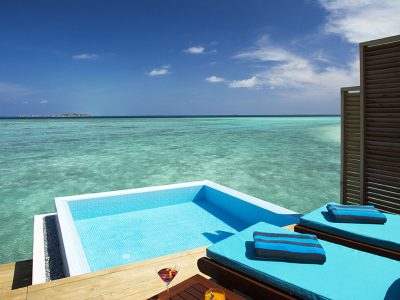
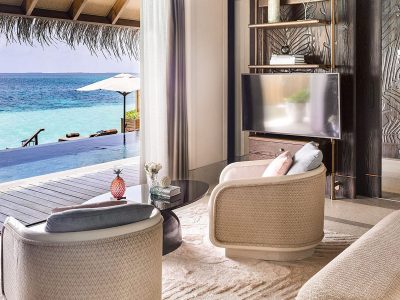
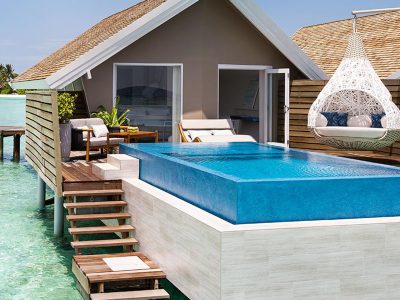
Mid-to-upper-tier overwater bungalows often include daily fresh beach towels, full bathroom amenity kits with premium toiletries, in-villa minibars, and Nespresso or coffee machines, though specifics vary by property, so verify with your resort before packing duplicates. Many properties at the upper tier go further, stocking snorkel masks and fins directly at the villa, offering kayaks and paddleboards from the deck, and providing reef-safe sunscreen samples as part of the welcome amenities. Some top-tier villas also feature butler service, in-villa dining setup, and overwater hammocks. The inclusions differ significantly between properties and price tiers, which is exactly why checking first is worth the five minutes it takes.
How the Ultimate Maldives Bungalow Guide helps you pack right
The curated villa listings at the Ultimate Maldives Bungalow Guide break down what each property commonly includes as standard, what’s available to hire, and how inclusions differ between budget-friendly and ultra-luxury overwater options. Before you finalize your packing list, spend ten minutes reviewing your villa’s listed amenities. It’s the most practical pre-trip step most Maldives travelers skip entirely, and it’s often the difference between hauling unnecessary gear through three airports and arriving with a perfectly edited bag.
The final word on Maldives packing essentials
Packing for the Maldives rewards strategy over volume. Reef-safe mineral sunscreen belongs in every bag, with no exceptions. Seaplane weight limits are real and enforced. Your wardrobe needs to work for both a sunset dinner at the resort restaurant and a morning walk through a local island village. And the smartest decision you can make before zipping your bag is confirming what’s already included at your villa.
Your complete Maldives packing essentials checklist comes down to a few clear priorities: mineral sunscreen and a UPF rash guard, your own snorkel mask, a soft-sided checked bag within your operator’s allowance (commonly 20 kg, confirm with your resort or transfer voucher), a smart-casual evening outfit, a sarong for local excursions, your IMUGA confirmation, and a targeted first-aid kit. Everything else depends on your specific villa and what’s already on that overwater deck waiting for you.
Start with the villa. The Ultimate Maldives Bungalow Guide makes it straightforward to compare overwater bungalows across every price tier, review standard inclusions, and choose the property that fits both your style and your packing strategy. Browse the listings before your next planning session and arrive knowing exactly what you need, and exactly what you don’t.
Frequently asked questions: Maldives packing essentials
How much can I pack on a seaplane to the Maldives?
Trans Maldivian Airways, the main seaplane operator, typically allows 20 kg of checked luggage and 5 kg of carry-on per passenger. Excess baggage fees apply beyond that. Always confirm your specific allowance with your resort or transfer voucher before you travel, as limits can vary by operator.
Are reef-safe sunscreens required in the Maldives?
No national law mandates reef-safe sunscreen, but many individual resorts enforce restrictions on chemical sunscreens near the reef, some at the waterline. To avoid being turned away from the beach or paying resort prices for a replacement, pack a mineral sunscreen with non-nano zinc oxide or non-nano titanium dioxide before you leave home.
What is the IMUGA form and when do I need to complete it?
The IMUGA Traveler Declaration is an online entry form required by Maldives immigration. All visitors must complete it within 96 hours of their scheduled arrival. Carry a copy of your QR code confirmation, both digital and printed, as connectivity on remote islands can be unreliable.
Do I need to bring snorkeling gear to the Maldives?
Bringing your own mask and snorkel is worthwhile for fit and hygiene reasons, a poorly sealed rental mask can ruin an otherwise perfect session on the reef. Fins, however, are bulky and most resorts provide adequate rental options, so those can stay at home. Check your specific villa’s amenity list first, as many upper-tier properties stock full snorkeling equipment at the deck.
What should I pack for visiting local islands in the Maldives?
Local inhabited islands follow Islamic cultural norms. Women should cover shoulders and knees; men should wear T-shirts and knee-length shorts. A lightweight sarong is the most versatile item you can bring, it doubles as a cover-up, beach wrap, and transfer layer, and one does the work of several separate pieces.